Coding agents are eating robotics
One of Fable 5.2’s headline results was its score on RoboDojo, a benchmark where the agent controls a simulated two-arm robot from camera images. It’s clear generic coding agents can now operate physical machines.

Data vendors are rushing to build realistic simulated training environments that help labs hillclimb benchmarks like RoboDojo. Training follows the benchmarks, so studying the relevant benchmarks gives us a sense of where the field is heading.
While the trending evals of 2026 focused on long-horizon coding (e.g., Terminal-Bench), key evals in 2027 will focus on running simulated experiments and operating machinery.

Control a Robot
Give the agent a task: pick up an object, take out the trash, or assemble something, and it writes code to operate the robot and analyze the results. Eval scores whether it can get the machine to complete the task using the available tools and feedback. For example, EmbodiedSWE evaluates this loop on simulated dexterity tasks.
Build a Robot
The agent produces a control program, training recipe, or mechanical design. Eval scores the artifact across various tasks and environments. For example, in RLE-Bench the agent designs a simulated mobile base, and the benchmark tests whether it can reach a shelf.
Run a Lab
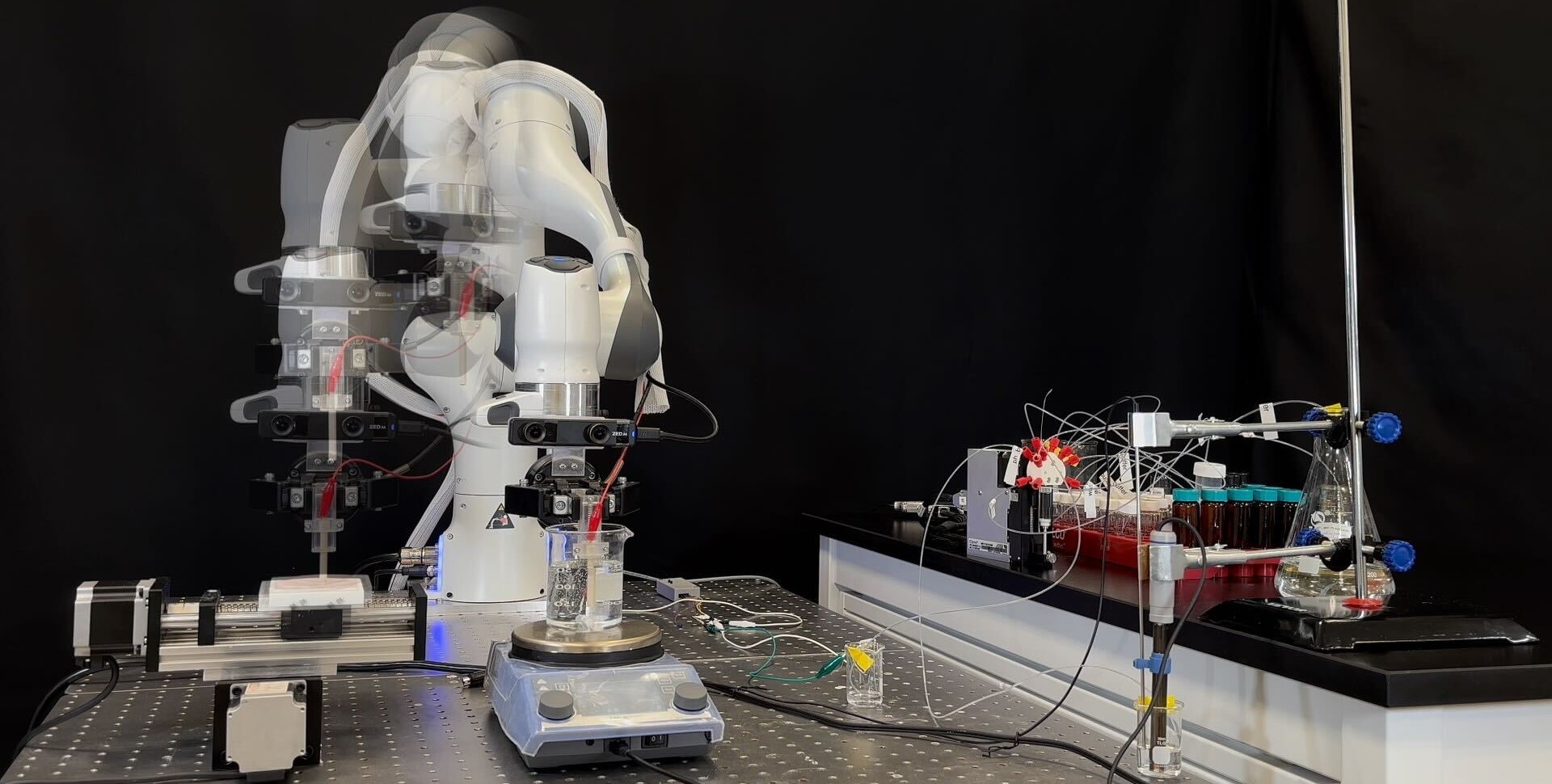
The agent operates lab equipment for an experiment: move samples, take measurements, and recover when something goes wrong. Timing and sample history matter. Eval scores whether the experiment succeeds as a whole.
Simulated vs. Real World
Simulated worlds like RoboCasa are where agents get trained, so sim benchmarks are the ones labs can easily hillclimb. The open question is how much transfers to the real world. RoboDojo helps because it evaluates in both simulation and on real robots.
A sim score can also overstate what the agent does: in simulation it can be handed exact object positions, while on hardware it has to work them out from camera images.
The takeaway
Robotics is the next frontier after long-horizon coding. Labs have begun reporting robotics evals in model cards, and data vendors are building simulated RL environments to hillclimb on physical tasks.